
Guttering and Historic Roofing – Essential for Roof Health
We’d say that a home is only as sound as its roof. And a well-maintained roof is only as strong as its drainage system.
In historic and heritage properties – even those where traditional materials and craftsmanship are specified – guttering is essential for long-term historic preservation. Blocked or damaged gutters don’t just cause leaks; they can lead to rotting timber, damaged masonry, and costly structural repairs.That’s why gutters are the unsung heroes of roofing. While they might seem like a boring, unnecessary add-on, they actually are quite interesting – and without them, poor drainage can damage historic (and even modern) roofing. But you’ll need to take on some seasonal maintenance tips to prevent disasters… don’t worry, we’ve got them covered!
So, whether you own a Victorian terrace, a thatched cottage, or a traditional Kent peg tiled property – understanding the link between guttering and roof health could save you thousands in repairs.
Let’s get stuck in.
Why guttering helps roofs last longer
Gutters and downpipes are designed to channel rainwater away from the roof, walls, and foundations of your property. This prevents water from pooling, which accelerates wear on roofing materials and can soak into mortar and brickwork. This is critical for older buildings, where decades of freeze-thaw can be made infinitely worse by the sudden expansion of water due to freezing.
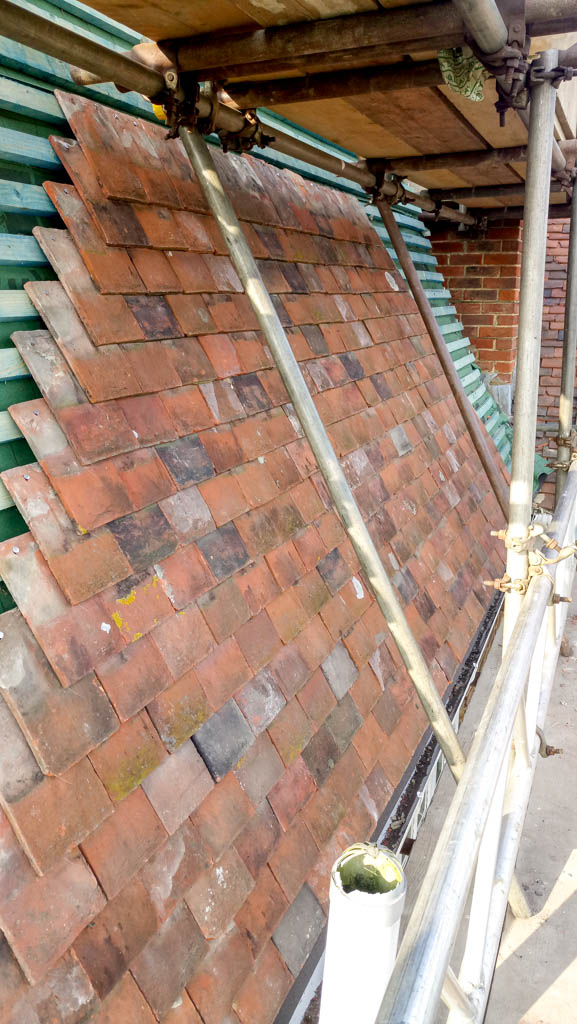
A Kent peg, clay-tiled heritage roof can last 100+ years – but without proper drainage, water ingress can cause damage deep inside the property. Clay is porous, and can soak in water like a sponge if it isn’t drained away properly. This can decay rafters, and lead to collapsed ceilings in under a decade.
If moisture was public enemy number one in the roofing world, then properly integrated guttering would be the town sheriff. It’s the first line of defence against mould and water ingress, and can’t be ignored (especially in a country as famously rainy as ours).
What happens when gutters fail?
90% of roof leaks start at the gutter line. If you notice any of the following, your guttering is likely to have a problem:
- Overflowing water saturating fascia boards. This can lead to rot
- Ice dams forming in winter – lifting tiles and lead flashing
- Leaf blockages – these create damp conditions for mould to get in
Why are heritage roofs more vulnerable?
Heritage roofing has additional challenges. For one, original, period-correct and authentic materials (like clay) absorb moisture faster than modern alternatives. Roof pitches in older designs were highly varied, and shallower roofs would rely heavily on gutters to prevent backups. Decorative features can create complex drainage paths, prone to blockages – and then of course there’s the age of the properties themselves.
Heritage roofs can be hundreds of years old. That’s not necessarily because things were “made better back then”; a lot of it is survivorship bias. You only ever see roofs that old because they got regular TLC!
And the gutters themselves are a different story on heritage roofing. Before plastic gutters, there were cast iron gutters. And we all know that iron rusts, weighs a ton, and can crack in extreme temperature fluctuations.
Not great for something that’s meant to channel water, be mounted up high, and withstand highly changeable seasons… But often, there’s no other alternative. Heritage properties that are listed may not be able to have plastic guttering, and so traditional materials must be used. Thankfully, treated materials are now available, which helps combat the vulnerabilities of traditional gutters – but it won’t make them any easier to haul up!
Seasonal gutter maintenance
Heritage property owners – you should be checking your roof at least twice a year, and after any extreme weather event. Ideally, you’ll have a seasonal checklist ready to follow – like this handy guide below:
After autumn: the critical cleanout
- Even if you live far from any trees, the wind will have carried some in. So, clear leaves and debris – and consider installing gutter guards if you are near trees.
- Check your downpipe flow with a hose. If you notice slow drainage, that’s a sign of a blockage. This can be cleared with the right tools, but you might want to inspect for signs of rust and cracks first, to prevent a significant (or even dangerous) failure.
Into winter: ice and storm preparation
- Inspect your guttering for cracks that could expand when frozen. Interestingly, both iron and water expand when they become a solid – but the rate is very different (and iron obviously doesn’t melt in the sun!).
- Ensure a proper slope is present in the guttering, to prevent ice dams from forming.
Summer: heat and debris roof checks
- While iron is pretty tough stuff, high heat can distort old cast iron. It is rarely uniform in structure, which can lead to hot spots and warping – so check for signs of this.
- If you live near trees or have them on your property, now’s the time to trim overhanging branches to reduce leaf fall.
Signs your gutters need urgent attention
- Water stains on walls
- Masonry decay, rising damp
- Gutters overflowing in rain
- Fascia rot
- Sagging sections of guttering
- Structural strain
- Peeling paint
- Trapped moisture damaging wood
When to call a heritage roofing specialist
Basic debris removal (with proper safety gear) and minor repairs can be handled by property owners – but ignoring deeper issues with your gutters costs 10x more than routine, specialist care. For historic roofs, where replacements can run into £100,000s, proactive maintenance isn’t optional – it’s essential.
If you need help maintaining your heritage roofing and metalwork, contact our expert team.
Your Heritage Roofing Specialist, Since 1984
Want to expand the lifespan of your heritage roofing? Get the advice and help you need, from an experienced heritage roofing specialist. For a quote, contact us at [email protected].