
Restoring a Shared Roof on a Period Property: The Party Wall Act

Restoring a Shared Roof on a Period Property Under the Party Wall Act

There is something special about owning a piece of England’s architectural history. But owning a period property comes with responsibilities – particularly when the time comes to repair or replace the roof.

If your home shares a roof line with a neighbour (as is the case with most terraces, semi-detached houses, and many converted flats), then the roof above your head is quite literally connected to someone else’s home as well.

And when that roof needs attention, the Party Wall Act 1996 is there to protect everyone’s interests.


What exactly is a party wall?

Before going into the legalities, it helps to understand what we mean by a “party wall”.

A party wall is the shared structure between two adjoining properties, serving both. For terraced and semi-detached homes, the party wall is the vertical division between you and your neighbour – but the roof structure spans across this boundary, with tiles or slates interlocking at the valley or ridge. 

In most cases, the party wall continues up into the roof space, acting as a fire break between the two properties, and giving each their own loft space. This also means that work on one side can have direct consequences for the other, including on the roof.

Flats add another issue: the roof is likely to be a shared asset for all residents in the building, even if the flats themselves are individually owned. In these situations, the “neighbour” isn’t just the person next door, but potentially everyone in the building!

So, it’s all a bit complicated as you can see. But there never used to be anything in place to police this – and things were  much worse. The Party Wall Act was passed in 1996 to provide a clear framework for managing shared structures.

It applies to properties in England and Wales, and covers three main types of party wall – those that sit astride the boundary, those that stand wholly on one owner’s land but are used by both (such as a garden wall), and boundary walls themselves.

For roofing projects, we’re focused on the first type – the dividing wall that separates two homes, and supports the roof structure above.


When does the Party Wall Act apply to roofing work?

Not every roofing job triggers the Party Wall Act. A simple repair, like replacing a few slipped tiles or clearing a blocked gutter, doesn’t need any formalities to take place. The Act is only concerned with works that affect the shared structure itself.

You will need to consider the Party Wall Act if your roofing project involves:

  • Cutting into a party wall to take the bearing of a new beam or joist
  • Inserting a damp proof course within the thickness of the party wall
  • Increasing the height of the party wall, such as when raising the roof line
  • Underpinning or strengthening the wall
  • Removing chimney breasts that form part of the party wall
  • Replacing the entire roof structure where it adjoins the neighbour’s side

Basically, if your planned work affects the structural integrity or weatherproofing of the shared structure, your neighbour has a legal right to know about it before you start.


The process: serving notice and seeking consent

So – you’ve planned your period roofing restoration, got a period roofing specialist who understands your property, and you’re ready to begin. But before a single tile is lifted, you must serve formal notice on your neighbour.

This notice must be in writing, and include:

  • Your name and address
  • A description of the planned works
  • The proposed start date
  • Details of any intended access to the neighbour’s property

You must give at least one month’s notice for works that involve the party wall itself, and two months for new building works adjacent to the boundary. If the adjoining property is rented, you have to serve notice to both the landlord and the tenants living there.

Once your neighbour receives the notice, they have some options:

  1. They can give written consent

This is the simplest outcome – all your neighbour has to do is confirm their agreement within 14 days. With consent, you can proceed as planned, keeping a copy of the consent for your records.

  1. They can refuse consent

This doesn’t stop your project, but it triggers what the Act calls a “dispute resolution process.” You will need to appoint a surveyor (or agree on one jointly) to draft a Party Wall Award, which sets out how the work should proceed to protect both properties.

  1. They can issue a counter notice

Within one month of receiving your notice, your neighbour can request additional works to be carried out at the same time. For example, if you are replacing your roof, they might ask for their flashing to be renewed too, saving future disruption.

If your neighbour doesn’t respond within the timeframes above, the Act treats this as a dispute – and the resolution process begins automatically.


What happens when the Act is ignored?

The Party Wall Act is a legal requirement, and ignoring it can lead to serious consequences. Actually, it can become a bit of a nightmare… 


This forum thread is a real life example of a nightmare scenario. The homeowner returned from holiday to find their neighbour’s roofers had not only replaced a beautiful Welsh slate roof with modern concrete tiles (completely out of keeping with the conservation area), but had also trespassed onto their property, removed original wooden fascia boards, and replaced them with white PVC. 


The garden was left littered with broken slates, nails, and debris, and plants had been trampled and killed.


Because no party wall notice had been served, the affected homeowner had no prior warning and no opportunity to discuss the work. The neighbour’s contractors had simply entered their property and made irreversible changes to the shared fabric of the building.


The affected homeowner could legally challenge their neighbour for trespass, criminal damage, breach of planning and conservation area regulations, and breach of the Party Wall Act itself, for failing to serve notice before undertaking works affecting the shared structure.


The sad reality is that pursuing all this after the fact is costly, stressful, and at best only partially successful. 


And in this case? The original slate roof was gone. The PVC fascia remained, though painting it dark green was suggested as a way to make it less offensive. The damaged plants could not be brought back.


This is precisely why serving notice before work begins is so important. It opens a dialogue and allows your neighbour to raise concerns, request additional protections, or agree on materials and methods before any irreversible decisions are made.

Keeping the neighbours happy

A period roofing restoration is stressful enough, without falling out with the people next door. With careful planning and good communication, you can keep the peace – and the project on track.

Start with a conversation

Before formal notice is given, knock on your neighbour’s door and explain what you’re planning. Show them sketches or photos, discuss timings, and ask if they have any concerns. A friendly chat is really the best way to start this – and can defuse any anxiety before it even begins.

Provide written information

Your period roofing contractor might already have some documents prepared for neighbours, explaining the work and what to expect. These guidance documents set out the process and reassure neighbours that due care will be taken. It’s a professional touch that can make a world of difference.

Discuss access arrangements early

If your contractor needs to enter your neighbour’s garden or scaffold over their property, agree this in advance. Be clear about how long access will be needed, and how you will minimise disruption.

Consider their roof too

If you are replacing your roof and the neighbouring roof is in poor condition, you might offer to have their flashing or abutment details renewed at the same time. This saves them future disruption and builds goodwill.

Instruct a period roofing specialist

A roofer who knows how to handle traditional slates and Kent peg tiles will also understand the importance of maintaining the character of the building. They will know how to weave the new roof into the old without causing damage, and they will treat the neighbour’s property with respect.

Clean up as you go

If your site is a total mess, any goodwill you’ve built with your neighbour can vanish fast. Make sure your period roofing contractor commits to leaving the site (including any neighbour’s land they have accessed) clean and safe at the end of each day.

Planning, conservation, and listed buildings

For period properties, the Party Wall Act isn’t the only consideration. Many period properties are within conservation areas, and some are listed.

If your property is listed, any work affecting its character, including roof replacement, needs listed building consent from the local planning authority. This is a separate process from the Party Wall Act, and failure to obtain consent is a criminal offence.


Read more: Can You Change the Roof on Listed Buildings?


In conservation areas, there may be restrictions on the materials you can use. Replacing natural slate with concrete tiles is exactly the kind of change that conservation areas would prevent. The local authority can take enforcement action to reverse these works, even though this is often difficult once the work is done.

A reputable period roofing specialist will be familiar with all of this. They can advise you on consents, and can liaise with planning officers on your behalf.

When things go wrong…

Despite your best efforts, party wall disputes can still happen if your neighbour refuses consent, or issues a counter notice with unreasonable demands. The work, once started, could also cause unforeseen damage – which can trigger a dispute.

The Party Wall Act provides a framework for resolving these disputes, without resorting to court. If consent is refused or not given, both parties appoint surveyors (or agree on one jointly) to prepare a Party Wall Award. This legally binding document sets out how the work should proceed, including:

  • The timing and method of the works
  • Measures to protect the neighbour’s property
  • Rights of access
  • Who bears the cost of any necessary protective work

The building owner typically pays the surveyors’ fees, but the award can specify otherwise. Once the award is made, both parties must comply with its terms.

If a neighbour simply ignores the process and starts work without notice (as in the nightmare scenario example), you have grounds for legal action. A court can issue an injunction to stop the work, order restoration of original features – and award damages for trespass and any harm caused.

But this is expensive and stressful. It’s so much better to follow the Act from the off, and keep communication open throughout.

Restoring a shared roof on a period property is an exercise in diplomacy. It’s a test of patience, and a lesson in shared responsibility. The Party Wall Act makes sure that this responsibility is exercised fairly, with proper notice, proper protections, and proper respect for the rights of both parties.

If you’re planning a period roofing restoration, start early. Talk to your neighbours. Consult a specialist roofer who understands both the history and the law. Serve formal notice in good time, and approach the project as what it is: a collaboration between adjoining owners, working together to protect the homes they love.

Period Roofing Restoration

Own a period property with a shared roof? Get the advice and help you need. Our experienced team builds, restores, and maintains heritage roofing. We perform period roofing restoration on many kinds of properties, and can help you navigate the complexity of party walls and shared structures.

For a quote, contact us at [email protected].
Emergency Listed Building Roof Repairs Guide

If you’re the owner of a historic property, then one of the worst things that you can see is evidence of a leak – especially during the winter.

Kent, Sussex, and the surrounding areas we work in are now in storm season, which means strong winds and lashing rain will be the norm for a while now. Even the hardiest roof will eventually fail without regular upkeep, but the sudden change in weather makes it all the more nerve-wracking!

Even if you’ve done all the preparation you can, a sudden storm can undo it all in minutes. 

But you might not notice straight away. The first sign of anything being wrong will usually be water stains on the ceiling – sometimes long after the damage has been done. This can quickly escalate into catastrophic damage to timber frames and other historic elements of the building. The cost of delaying repairs is almost always measured by the need for vastly more complex and expensive restoration work down the line. 

You’ve got to act fast, as soon as you notice the damage. But for a listed building, how you go about this might be a little different to other properties.

Emergency listed building repairs guide for home owners

  1. Upon discovering damage, take immediate and non-destructive action to make the building safe and weathertight. 
  2. Contact your insurer, and if applicable, your home emergency cover provider, to take further action.
  3. Write to your local authority’s conservation officer to explain the situation, provide photographs, and get informal advice on the consent process for urgent works.
  4. Find an expert in listed building roof repairs, like Tenterden Roofing, in your local area. We work on listed buildings in London, Surrey, Kent and Sussex.

Work together with your heritage roofing specialist and your local conservation officer to develop a repair spec for your LBC application. A proper repair using traditional materials and crafts may take more time and incur higher costs than a normal roof – but it’s an investment in your unique property (and our shared cultural heritage).

Speed is everything

Remember that owning a listed building comes with legal responsibilities – and listed building consent is a statutory requirement for any works?

This still applies in a storm situation – but most local authority conservation officers understand that emergency works are vital, and have procedures in place to deal with them. 

Any significant, irreversible work carried out without consultation is still a big no no. Instead, you must undertake a “minimum necessary intervention”; just enough to make the building safe without compromising a period of correct repair later down the line.

Temporary repairs to limit the damage

The immediate priority is to stop the water ingress and protect the building. You need speed, not perfection – so don’t wait for a historic roofing specialist to become available. Act immediately to limit the damage, either by calling your insurer or home emergency cover provider – or doing the necessary work yourself (at least where you feel safe to do so).

An emergency roofer might carefully lift displaced or broken tiles or slates to stop them blowing away. Next, they’ll likely cover the exposed area with a heavy duty cover – like a tarp or other waterproof sheeting, securely battened down to withstand wind. 

Placing buckets and using waterproof sheeting indoors to protect floors and furnishings is another basic but vital step, too. 

The whole point of these temporary fixes is to buy you time – so you can get the right materials (and the right craftspeople) to carry out a permanent repair under LBC. 

Full roof repairs

Once the property is safe, you need to think about long-term solutions.

A full repair for a listed building roof takes understanding and expertise – working with the original technology and aesthetics. 

A trained heritage roofing specialist needs to inspect and understand the cause of the failure, to see if it was simply caused by a gust of wind, or if there’s something more serious going on under the tiles. This is essential to getting a durable and correct repair that serves you and the building properly.

With traditional materials like slate or Kent peg tiles, there can be a temptation to use more modern methods – for cost, for perceived durability, and for ease of access. But this can be a costly mistake, because your legal obligation as the custodian of your heritage building is to maintain historical accuracy.

This applies to all aspects of listed building roof repairs – but these age-old techniques and materials last hundreds of years for a reason; modern equivalents don’t have the time in yet, but it’s clear they’re not as hardy as traditional materials. It pays in every way to stick to your building’s script; so don’t be tempted by cheaper, quicker ways of fixing your heritage roof.

Read more: UK storms – how to protect your period roofing

Caring for heritage roofing Since 1984

We specialise in listed building roof repairs – for traditional slate tiling, Kent peg tiling, and the historic roofing styles found in Surrey, Kent and Sussex. For a quote, contact us at [email protected]

Kent and Clay – From Pre-History to Kent Peg Tiles

Kent Peg Tiles and the Clay of Kent

Kent’s landscape tells a story millions of years in the making. A story shaped by ancient seas, shifting continents – and of course, clay. 

This humble material has been an ever-present part of the county’s history, fuelling the thriving brick and tile industry that gave rise to Kent peg tiles. The London Clay Formation, a vast sedimentary deposit, forms an important part of Kent’s geology – and clay has influenced everything from Kent’s fertile soils, to its distinctive architectural heritage.

Join us as we trace Kent’s relationship with clay, examining how it got here, what makes it unique, and why it became so vital to our craft – particularly in the production of the iconic Kent peg tile.

The origins of Kent’s clay: a geological legacy

How did Kent get its clay in the first place? The answer is older than human history…

Around 50 million years ago, most of southern England lay beneath a warm, shallow sea. Over vast amounts of time, fine particles of eroded rock and organic matter settled on the seabed. And as time went on, the buildup of weight compressed it into thick layers of clay. 

This is how the London Clay Formation emerged; a dense, blue-grey clay, rich in fossils and minerals, stretching across Kent and beyond. But the London Clay, found in the north of the county, is only part of the story; south of Maidstone, vast deposits of weald clay can be found – giving the region a huge variety of clay types to work with.

Weald clay, which has the distinctive red and orange tones known in Kent’s roofing, would give rise to the industry that shaped the region for centuries.

Unlike the sandy or chalky soils found elsewhere in Britain, Kent’s clay is notably impermeable to water and highly plastic – making it ideal for shaping and firing. Its highly durable, and the iron impurities within it is what lends traditional bricks and tiles their signature reddish hues.

Clay in prehistory: preservation and early use

Long before kilns and Kent peg tiles, Kent’s clay was a guardian of the region’s history. Its waterlogged, oxygen-poor conditions preserved prehistoric wood, leather, and even ancient footprints in remarkable detail. 

Coastal erosion revealed buried treasures from Neolithic tools to Roman pottery shards, embedded in the clay cliffs in Whitstable. The Street, as it’s called, is a spit of land that emerges during low tide – and walking along it really shows how much history is buried in the clay.

Early inhabitants of Kent quickly recognised how useful clay could be, making it into crude vessels and structures. But it was the Romans who really advanced Kent’s clay-working techniques – introducing kiln-fired bricks and tiles to Britain. 

The Roman legacy endured in the ruins of villas and their hypocaust systems (underfloor heating systems built with locally sourced clay tiles), which can still be seen today.

The rise of Kent’s brick and tile industry

By the medieval period, Kent’s clay was being used (and sometimes abused) for construction. The Wealden forests provided ample fuel for kilns, and the county’s rivers allowed easy transport of finished goods to London and beyond. 

The birth of Kent peg tiles

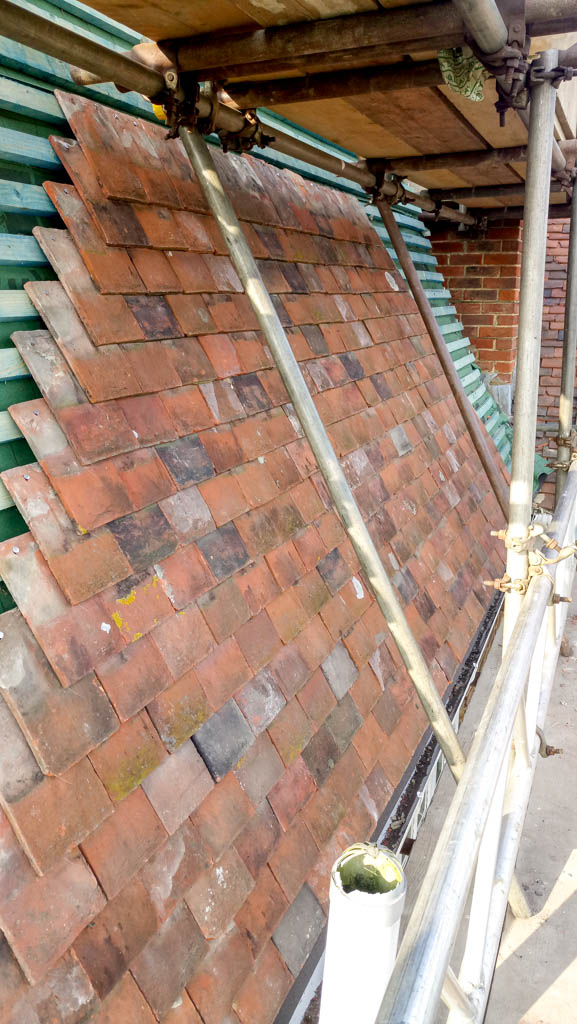
Kent’s most enduring contribution to architecture has to be the Kent peg tile. Made from the various clays of the region, moulded over wooden forms, and fired at lower temperatures, each tile has a distinctive, slightly irregular appearance – and that’s a big part of the charm. 

Their wooden-pegged design was a revelation, allowing for speedy, secure fastening. The lapping allowed rainwater to channel efficiently, and being porous, they helped buildings “breathe” – preventing damp.

Production peaked in the 18th and 19th centuries, with small family run kilns dotting the Weald. 

Kent peg tiles had a durability and aesthetic charm that made them a favourite for churches, farmhouses, and oasts. Their russet tones are still, to this day, a major feature of Kent’s landscapes.

Industrial expansion and decline

The Victorian era transformed Kent’s brickmaking trade. The arrival of railways and industrial kilns brought about mass-produced bricks, supplying the capital’s booming housing demand. But by the early 20th century, cheaper imports and the discovery of concrete led to the decline of traditional tileworks.

Today, only a handful of artisans continue crafting Kent peg tiles, using time-honoured methods – and we are one of the few roofing companies that’s keeping the tradition alive.

But even though it’s not the quickest and cheapest material for most jobs anymore, Kent’s clay is still world-class. Its fine particles allow intricate shaping without cracking, and its high mineral content gives it strength when fired – resisting frost and wear.

And its legacy lives on.

A Kent peg tiled roof is a piece of Kent’s identity, shaped by the land itself. And at Tenterden Roofing, our mission is to preserve that identity for as long as possible.

Heritage Roofing Since 1984

We’ve specialised in Kent Peg tiling for decades – restoring and conserving historic rooflines at heritage properties, churches and cottages. Our work maintains the rich history of this tiling specialism, handed down through the ages, while ensuring that modern building practices and regulations are met.

Let’s talk about Kent peg tiles and your heritage property. Contact us at [email protected].

Solar Panels and Historic Roofing: What You Need to Know

You’ve no doubt seen the ads on social media websites about how installing solar panels has never been easier, or cheaper. And in many ways, that’s true. You’re probably also painfully aware of rising electricity costs, and a push for renewables on our changing planet.

The summer sun might make these systems seem like an attractive investment, but when it comes to heritage roofing, there are significant considerations that go beyond simple energy savings. 

The truth is, if you own a historic or listed property, going solar is far from straightforward. 

There’s so much to consider, even before we get to Historic England and conservation groups. The visual impact on your building’s character, the potential damage to historic materials, and of course strict planning regulations, all play a part in determining whether solar panels are a viable option.

Historic England and heritage roofing specialists generally advise caution when altering traditional roofs beyond their original state.

While solar technology can sometimes be integrated, the process requires careful planning, expert consultation, and more often than not, formal consent.

Still interested in going solar? Then let’s look at the factors to consider before proceeding, from legal restrictions to practical maintenance, so we can answer the question; is it worth installing solar panels on a historic roof?

Listed buildings and solar panels

The first and most important consideration for owners of listed buildings is whether listed building consent is required. In most cases, installing solar panels on a listed property will need approval, because any alteration to the roof could affect the building’s historic character.

Historic England’s guidance is clear: while solar panels are not outright banned on listed buildings, they are only permitted where they do not harm the significance of the structure.

An assessment will focus on visibility and impact. If the panels can be installed on a rear roof slope or outbuilding where they are less obtrusive, consent might be more likely. 

But if the proposed installation would alter the appearance of a principal elevation or impact original roofing materials, permission is often refused. 

Some conservation areas also have additional restrictions – which means that even non-listed, but still historic properties may face hurdles.

If you’re determined to proceed, then early engagement with the local planning authority is essential. A solid, complete application (supported by heritage statements and detailed drawings showing minimal visual impact) can improve your chances of approval. 

But it’s worth noting that some councils are simply reluctant to permit solar panels on prominent historic roofs in just about any case. Some local areas depend on their historic charm to attract visitors, investors, and business – if that’s lost to a sea of solar panels, then what’s left to conserve?

Does historic roof maintenance change with solar panel installations?

How do solar panels affect the long-term maintenance of a historic roof?

Well, traditional roofing materials, like Kent peg tiles and slate, need routine care – and adding PV systems can complicate access for repairs. The weight of solar panels and mounting systems needs to be assessed, to avoid structural damage or water ingress.

One of the biggest concerns is the risk of trapped moisture. 

Historic roofs often rely on breathability, and if solar panels are installed without adequate spacing, they can create low airflow areas where damp accumulates – leading to timber decay, tile deterioration, issues with freeze/thaw, and more problems besides.

Proper installation should include plans for ventilation, using raised mounting systems that allow air to circulate beneath the solar panels.

Cleaning and inspecting your historic roofing will also become more challenging with solar panels. Key parts of the roof might be harder to access – meaning routine maintenance tasks (like clearing gutters and removing leaf litter) can take longer, or require specialist care.

Make sure you factor in these additional costs when you’re weighing up the benefits of solar energy.

Is it even worth installing solar panels if you value aesthetics?

This might be a sweeping statement, but we think that most owners of period properties have specifically bought them for their character and how they look; not for their energy efficiency.

The visual impact of solar panels isn’t worth it for quite a lot of people who own historic buildings. The contrast between traditional materials and modern PV solar arrays can be more than a little bit jarring. 

There are alternative solutions, like solar slates. They mimic traditional roofing materials, and offer a more discreet option – blending in pretty seamlessly with real slate. They tend to be less efficient and more expensive than conventional panels, but do offer the option for 100% coverage, which more than makes up the efficiency shortfall.

Ground-mounted solar arrays or solar tiles on outbuildings are also a decent compromise – helping you generate renewable energy without affecting your main roof. So, even if you’re dead against altering your historic building (or your assessment doesn’t allow you to proceed), then there might still be ways of benefiting from solar energy on other parts of your property

Heritage versus sustainability

Installing solar panels on a historic roof isn’t always impossible – but it does always require careful thought and expert advice. For many owners of heritage properties, a willingness to compromise and a flexible approach are what you’ll need more than anything else.

Before making a decision, we recommend that you consult a historic roofing specialist and your local authority, to assess the specific circumstances of your property. Start the process through the Planning Portal, and be accurate and truthful – because it can land you in some big legal trouble if you don’t!

But above all, it will help you make an informed choice and proceed in a way that respects both the past and the future.

Historic Roofing Experts Since 1984

Get the advice and help you need, from our experienced team of heritage roofing experts. For a quote or consultation, call 01233 860301 or contact us at [email protected]

Solar Panels and Historic Roofing: What You Need to Know

Solar Panels and Historic Roofing

You’ve no doubt seen the ads on social media websites about how installing solar panels has never been easier, or cheaper. And in many ways, that’s true. You’re probably also painfully aware of rising electricity costs, and a push for renewables on our changing planet.


The summer sun might make these systems seem like an attractive investment, but when it comes to heritage roofing, there are significant considerations that go beyond simple energy savings.


The truth is, if you own a historic or listed property, going solar is far from straightforward.


There’s so much to consider, even before we get to Historic England and conservation groups. The visual impact on your building’s character, the potential damage to historic materials, and of course strict planning regulations, all play a part in determining whether solar panels are a viable option.


Historic England and heritage roofing specialists generally advise caution when altering traditional roofs beyond their original state.


While solar technology can sometimes be integrated, the process requires careful planning, expert consultation, and more often than not, formal consent.


Still interested in going solar? Then let’s look at the factors to consider before proceeding, from legal restrictions to practical maintenance, so we can answer the question; is it worth installing solar panels on a historic roof?

Listed buildings and solar panels

The first and most important consideration for owners of listed buildings is whether listed building consent is required. In most cases, installing solar panels on a listed property will need approval, because any alteration to the roof could affect the building’s historic character.


Historic England’s guidance is clear: while solar panels are not outright banned on listed buildings, they are only permitted where they do not harm the significance of the structure.


An assessment will focus on visibility and impact. If the panels can be installed on a rear roof slope or outbuilding where they are less obtrusive, consent might be more likely.


But if the proposed installation would alter the appearance of a principal elevation or impact original roofing materials, permission is often refused.


Some conservation areas also have additional restrictions – which means that even non-listed, but still historic properties may face hurdles.


If you’re determined to proceed, then early engagement with the local planning authority is essential. A solid, complete application (supported by heritage statements and detailed drawings showing minimal visual impact) can improve your chances of approval.


But it’s worth noting that some councils are simply reluctant to permit solar panels on prominent historic roofs in just about any case. Some local areas depend on their historic charm to attract visitors, investors, and business – if that’s lost to a sea of solar panels, then what’s left to conserve?

Does roof maintenance change with solar panel installations?

How do solar panels affect the long-term maintenance of a historic roof?


Well, traditional roofing materials, like Kent peg tiles and slate, need routine care – and adding PV systems can complicate access for repairs. The weight of solar panels and mounting systems needs to be assessed, to avoid structural damage or water ingress.


One of the biggest concerns is the risk of trapped moisture.


Historic roofs often rely on breathability, and if solar panels are installed without adequate spacing, they can create low airflow areas where damp accumulates – leading to timber decay, tile deterioration, issues with freeze/thaw, and more problems besides.


Proper installation should include plans for ventilation, using raised mounting systems that allow air to circulate beneath the solar panels.


Cleaning and inspecting your historic roofing will also become more challenging with solar panels. Key parts of the roof might be harder to access – meaning routine maintenance tasks (like clearing gutters and removing leaf litter) can take longer, or require specialist care.


Make sure you factor in these additional costs when you’re weighing up the benefits of solar energy.

Is it worth installing solar panels if you value aesthetics?

This might be a sweeping statement, but we think that most owners of period properties have specifically bought them for their character and how they look; not for their energy efficiency.


The visual impact of solar panels isn’t worth it for quite a lot of people who own historic buildings. The contrast between traditional materials and modern PV solar arrays can be more than a little bit jarring.


There are alternative solutions, like solar slates. They mimic traditional roofing materials, and offer a more discreet option – blending in pretty seamlessly with real slate. They tend to be less efficient and more expensive than conventional panels, but do offer the option for 100% coverage, which more than makes up the efficiency shortfall.


Ground-mounted solar arrays or solar tiles on outbuildings are also a decent compromise – helping you generate renewable energy without affecting your main roof. So, even if you’re dead against altering your historic building (or your assessment doesn’t allow you to proceed), then there might still be ways of benefiting from solar energy on other parts of your property

Heritage versus sustainability

Installing solar panels on a historic roof isn’t always impossible – but it does always require careful thought and expert advice. For many owners of heritage properties, a willingness to compromise and a flexible approach are what you’ll need more than anything else.


Before making a decision, we recommend that you consult a historic roofing specialist and your local authority, to assess the specific circumstances of your property. Start the process through the Planning Portal, and be accurate and truthful – because it can land you in some big legal trouble if you don’t!


But above all, it will help you make an informed choice and proceed in a way that respects both the past and the future.

Historic Roofing Experts Since 1984

Get the advice and help you need, from our experienced team of heritage roofing experts. For a quote or consultation, call 01233 860301 or contact us at [email protected]

Can You Jet Wash Roof Tiles? Read This First

There’s something deeply satisfying about jet washing. Anyone who’s ever cleaned their deck or patio with one will know – the way the water cuts through years of grime, moss, and algae like a hot knife through butter. That satisfying, perfectly clean streak… It’d almost be therapeutic if it weren’t so noisy and dirty!


But when it comes to cleaning roof tiles (especially delicate heritage slate tiling or traditional Kent peg tiling), breaking out your jet washer could be one of the most expensive mistakes you ever make.


Can you jet wash roof tiles? The short answer is no.


It might seem like a good idea for getting your roof tiles cleaned up, but it can be unbelievably destructive. Yes, roofing is designed to be waterproof – but it’s not designed to subjected to pressurised jets of water travelling at speeds of up to 440 mph!


Pressure washing can cause irreversible damage to roof tiles, stripping away outer layers of material. Pressurised jets from pressure washers can exceed 4000 PSI, forcing water beneath tiles, and even cracking or dislodging them entirely.


What seems like a quick fix for a dirty roof could end up costing thousands in repairs, not to mention all the water leaking into your loft space.

Jet washing roof tiles is a bad idea

Pressure washers can crack and break tiles. Slate and Kent peg tiling is durable, but not indestructible. High pressure water jets can easily chip or fracture slate tiles, especially older, weathered ones.


Kent peg tiles, which rely on careful placement and lapping, can be dislodged quite easily too, and being made of porous clay, can become saturated to the point of leaking into the loft space. The jet can force water under tiles as well, leading to leaks, soaking the battens and felt underneath. This can lead to rotting roof timbers, mould growth in the loft, and water damage. Even if the tiles look cleaner, the hidden damage could silently worsen over time.


At higher pressures, the water jet can crack a tile, or even cut through it. 


You might think you can run softer pressures and get away with it. But while your heritage roofing tiles might not show immediate signs of failure, their lifespan can be drastically reduced by having water forced into them.


The worst part? Jet washing doesn’t even solve the root problem. Moss and algae grow back, often faster after pressure washing – because the protective patina the roof had built up is gone. You’ll likely be back to square one within a year.


So, if jet washing is off the table, how should you clean your roof?

Safe alternatives to jet washing

Sometimes – in fact, most of the time – there’s no real need to clean your roof tiles. Moss and lichen growth is normal and expected, and it only becomes a problem when it’s excessive. When mosses and lichens build up to the point where they block the flow of rainwater and start getting washed into gutters, then it’s time to act.


Moss and lichen growth is usually strongest on shady parts of a roof – under trees, and in areas where birds stop to perch (as their poo acts as fertiliser, speeding up growth).


Leaves and gunk are probably a bigger concern, as they can get into gutters – and that can be concern.


Read more: Guttering and Historic Roofing – Essential for Roof Health


Clearing your roof of leaves and moss can simply be done by hand – or with a brush.You can absolutely use a low pressure spray to wash the roof off, combined with treatment solutions to kill moss, algae, and lichen – without damaging tiles.


But it’s not without risk, and being up high on a roof isn’t for everyone.


If you have slate tiling or Kent peg tiling, a heritage roofer could quickly clean and treat your roof with the safest cleaning method. They’ll also check for loose or damaged tiles, blocked gutters, and any other causes for concern.

When to call a heritage roofing expert

DIY cleaning might seem like a cheap and easy way to clean your roof. But the risks outweigh the savings. Get an expert assessment, and spot hidden issues before they worsen – with safe and effective cleaning for your slate and Kent peg tiles.

And remember: don’t ever be tempted to jet wash your roof tiles. The long-term consequences (cracked tiles, water damage, and diminished roofing lifespan) simply aren’t worth it. For slate and Kent peg tiling, gentle cleaning and professional maintenance are the only safe ways to keep your roof watertight, structurally sound, and looking beautiful for years to come.

Slate and Kent Peg Tiling Since 1984

Want to expand the lifespan of your heritage property? Get the advice and help you need, from our experienced team of heritage roofing experts. We specialise in traditional slate tiling and Kent peg tiling, including cleaning, care, and maintenance. For a quote, contact us at [email protected]

Guttering and Historic Roofing – Essential for Roof Health

We’d say that a home is only as sound as its roof. And a well-maintained roof is only as strong as its drainage system. 

In historic and heritage properties – even those where traditional materials and craftsmanship are specified – guttering is essential for long-term historic preservation. Blocked or damaged gutters don’t just cause leaks; they can lead to rotting timber, damaged masonry, and costly structural repairs.That’s why gutters are the unsung heroes of roofing. While they might seem like a boring, unnecessary add-on, they actually are quite interesting – and without them, poor drainage can damage historic (and even modern) roofing. But you’ll need to take on some seasonal maintenance tips to prevent disasters… don’t worry, we’ve got them covered!

So, whether you own a Victorian terrace, a thatched cottage, or a traditional Kent peg tiled property – understanding the link between guttering and roof health could save you thousands in repairs. 


Let’s get stuck in.


Tenterden Roofing - Thorn Oast - Kent Peg Tiling Section

Why guttering helps roofs last longer

Gutters and downpipes are designed to channel rainwater away from the roof, walls, and foundations of your property. This prevents water from pooling, which accelerates wear on roofing materials and can soak into mortar and brickwork. This is critical for older buildings, where decades of freeze-thaw can be made infinitely worse by the sudden expansion of water due to freezing.

A Kent peg, clay-tiled heritage roof can last 100+ years – but without proper drainage, water ingress can cause damage deep inside the property. Clay is porous, and can soak in water like a sponge if it isn’t drained away properly. This can decay rafters, and lead to collapsed ceilings in under a decade.

If moisture was public enemy number one in the roofing world, then properly integrated guttering would be the town sheriff. It’s the first line of defence against mould and water ingress, and can’t be ignored (especially in a country as famously rainy as ours).

What happens when gutters fail?

90% of roof leaks start at the gutter line. If you notice any of the following, your guttering is likely to have a problem:

  • Overflowing water saturating fascia boards. This can lead to rot
  • Ice dams forming in winter – lifting tiles and lead flashing
  • Leaf blockages – these create damp conditions for mould to get in

Why are heritage roofs more vulnerable?

Heritage roofing has additional challenges. For one, original, period-correct and authentic materials (like clay) absorb moisture faster than modern alternatives. Roof pitches in older designs were highly varied, and shallower roofs would rely heavily on gutters to prevent backups. Decorative features can create complex drainage paths, prone to blockages – and then of course there’s the age of the properties themselves. 

Heritage roofs can be hundreds of years old. That’s not necessarily because things were “made better back then”; a lot of it is survivorship bias. You only ever see roofs that old because they got regular TLC!

And the gutters themselves are a different story on heritage roofing. Before plastic gutters, there were cast iron gutters. And we all know that iron rusts, weighs a ton, and can crack in extreme temperature fluctuations.

Not great for something that’s meant to channel water, be mounted up high, and withstand highly changeable seasons… But often, there’s no other alternative. Heritage properties that are listed may not be able to have plastic guttering, and so traditional materials must be used. Thankfully, treated materials are now available, which helps combat the vulnerabilities of traditional gutters – but it won’t make them any easier to haul up!


Seasonal gutter maintenance

Heritage property owners – you should be checking your roof at least twice a year, and after any extreme weather event. Ideally, you’ll have a seasonal checklist ready to follow – like this handy guide below:

After autumn: the critical cleanout

  1. Even if you live far from any trees, the wind will have carried some in. So, clear leaves and debris – and consider installing gutter guards if you are near trees.
  2. Check your downpipe flow with a hose. If you notice slow drainage, that’s a sign of a blockage. This can be cleared with the right tools, but you might want to inspect for signs of rust and cracks first, to prevent a significant (or even dangerous) failure.

Into winter: ice and storm preparation

  1. Inspect your guttering for cracks that could expand when frozen. Interestingly, both iron and water expand when they become a solid – but the rate is very different (and iron obviously doesn’t melt in the sun!).
  2. Ensure a proper slope is present in the guttering, to prevent ice dams from forming.

Summer: heat and debris roof checks

  1. While iron is pretty tough stuff, high heat can distort old cast iron. It is rarely uniform in structure, which can lead to hot spots and warping – so check for signs of this.
  2. If you live near trees or have them on your property, now’s the time to trim overhanging branches to reduce leaf fall.

Signs your gutters need urgent attention

  • Water stains on walls
  • Masonry decay, rising damp
  • Gutters overflowing in rain
  • Fascia rot
  • Sagging sections of guttering
  • Structural strain
  • Peeling paint
  • Trapped moisture damaging wood

When to call a heritage roofing specialist

Basic debris removal (with proper safety gear) and minor repairs can be handled by property owners – but ignoring deeper issues with your gutters costs 10x more than routine, specialist care. For historic roofs, where replacements can run into £100,000s, proactive maintenance isn’t optional – it’s essential.

If you need help maintaining your heritage roofing and metalwork, contact our expert team.

Your Heritage Roofing Specialist, Since 1984

Want to expand the lifespan of your heritage roofing? Get the advice and help you need, from an experienced heritage roofing specialist.  For a quote, contact us at [email protected]

How Long Will My Roof Last? Heritage Roofing Lifespans Explained


Tenterden Roofing - The Red House, Benenden, Kent

Heritage Roofing Lifespans

Your roof is probably the most important part of your home. It’s the shelter, the very
backbone of what protects you and your belongings from the elements. But how long can
you expect it to last?

The answer depends on the materials used, the quality of installation, and how well it’s
maintained. Let’s explore the lifespans of roofing materials, from traditional heritage roofing
lifespans to modern concrete tiles – and rank the best options for the UK climate.
We’ll also discuss the telltale signs that it’s time for a replacement, and look at ways to keep
your roof working for longer.

Comparing roofing materials: lifespans and durability

Different roofing materials offer varying levels of durability. Heritage roofing materials might
seem like old hat, but they’re often incredibly resilient when taken care of – and some can
last hundreds of years.

Slate tile roofing

Natural slating is one of the most durable and long-lasting roofing materials available. A well-
maintained slate roof can last hundreds of years, making it a popular choice for properties
old and new. Slate is naturally resistant to fire, rot, and insect damage – and its low water
absorption rate makes it ideal for our temperate but wet climate.

But slate roofs require skilled installation and can be expensive upfront. They are also
heavy, so your property’s structure must be able to support the weight. In heritage
properties, especially listed buildings, a like for like replacement is usually prescribed.

Clay and Kent peg tile roofing

Kent peg tiles are a traditional roofing material often seen on period properties in Kent and
surrounding counties. They have a lifespan of 70 to 100 years when properly maintained,
and are highly durable. Clay is fire resistant and environmentally friendly – made from
natural materials with very little damage caused from mining. If a listed building has Kent peg
tiles, then a like for like replacement is also likely to be specified in the event that repairs are
needed.


Modern roofing materials

How do heritage roofing materials shape up in comparison to their modern equivalents?
Actually, surprisingly well. In many cases, a roof made with clay or slate tiles will outlive most
other materials by some stretch.

Concrete tiles

Concrete tiles, the modern alternative to clay and slate, offer a similar level of protection at a
lower cost. They typically last 50 to 70 years, but this is dependent on the quality of the tiles
and installation. Concrete tiles are versatile, available in a range of colours and styles, and
are resistant to fire and extreme weather.

Flat felt roofing
Flat roofing is more common on outbuildings, because it’s economical and less critical – but
it’s not unheard of to find homes built in more recent decades that have a flat roof on the
main property. Many extensions have been built with flat roofing, and usually, it’s all good.
However – flat roofing can be quite a tricky one to maintain, and lifespans are usually
expected to be around 10 years. The lower cost certainly helps the frequency, but flat roofing
is also very prone to storm damage, and leaks can be harder to trace. Often, the first sign of
a problem is failure!

The best roofing materials for UK homes

The UK climate, with its frequent rain (and ever more frequent storms) demands roofing
materials that can withstand harsh conditions. Here’s our ranking of the best roofing
materials for the job:

1. Slate Roofs

Slate’s natural durability and resistance to water make it the top choice for the UK climate.
There are slate roofs that are hundreds of years old – and many heritage properties still
sport at least some of their original tiles.

2. Clay tiles

Clay tiles excel in wet conditions and offer excellent longevity. Kent peg tiles are particularly
attractive, and are a traditional feature of southeast England – where churches, town halls,
and other period properties still use the age-old roofing methods handed down from
generation to generation.

3. Concrete tiles

Although not suitable for listed buildings or heritage properties, concrete is a good cost-
effective alternative to clay and slate. Concrete tiles are durable and versatile, and with
many colour and shape options available (including ones that mimic natural materials), it’s a
great choice for new builds that need to fit into an old location.

Signs it’s time for a roof replacement

Even the most durable roofing materials will eventually show signs of wear and tear – and
these are the signs you need to watch out for.

Age of the roof

If your roof is nearing the end of its expected lifespan, have it inspected by a professional.
Even if you’ve not encountered any problems, there could be something waiting in the wings.
Best to get it seen to now and get a clean bill of health, than to wait for a leak…

Missing or damaged tiles

Missing, cracked or broken tiles are a clear sign that your roof is in need of some TLC. At
minimum, damaged tiles need replacement – but there could be leakage and water damage
underneath that needs to be resolved, too.

Leaks or water stains

Water stains and mould on your ceilings or walls are a sign of a leaking roof. Even small
leaks can cause significant damage over time – so it’s important to act quickly. Nobody
wants mould growth, which can quickly spiral into a health issue for both you and your home.

Sagging

Lots of heritage properties have settled over the years, which can cause the roof to appear
bowed or saggy in places. Sometimes, this is fine – but a sagging roof might be a serious
issue that indicates structural damage. It could be caused by prolonged water exposure or a
failing roof structure, or by subsidence. It’s a good idea to get any new or sudden sagging
looked at immediately.

Extending the lifespan of your heritage roof

While all roofs will eventually need replacing, getting your heritage roof inspected by a
professional at least once a year can help you identify and address issues early. Fixing them
early, and carrying out essential maintenance (like cleaning gutters and removing excess
moss buildup) will help keep the whole structure safe for longer.

The lifespan of your roof really depends on how well it’s maintained. Slate and clay tiles are
the most durable options, but they’re not invincible – and the ones still standing after
hundreds of years are the exception, not the rule.

For heritage properties built with slating or Kent peg tiled roofing, you need an expert hand
– and we’re here to help!

Heritage Roofing Since 1984

Want to expand the lifespan of your heritage property? Get the advice and help you need,
from our experienced team of heritage roofing specialists. For a quote, contact us at
[email protected].

Preventing Heritage Roof Damage from Wildlife

Preventing roof damage from wildlife

Damage caused by wildlife is a problem for all homeowners – but animals particularly like to make their homes in older, traditional structures.

Thatch roofs, wooden beams, and even trusty Kent peg tiles often become attractive locations for wild birds, rodents and a plethora of other animals. Of course, wildlife is a natural part of the environment – and we love our natural world – but animals invading a property can cause significant (and costly) damage if left unchecked.

In this post, we’ll explore why animals target roofing, what kinds of damage they can cause – and look at how to prevent running afoul of a fowl (or a rodent, for that matter).

Why are wild animals drawn to heritage roofing?

Animals like roofing for the same reasons we do; roofs offer shelter, warmth and safety. This makes them an ideal nesting spot for many animals, but traditional roofing materials, like thatch, are especially appealing.

That’s because they mimic the natural environments that many wild species are used to. Thatch can make for a soft, insulated nesting material – which rodents like rats and mice find particularly inviting.

Tiles, on the other hand, create small gaps that birds, bats, and other flying creatures can easily squeeze into – using the spaces within to build nests or to take shelter from the elements.

Roof damage from wildlife tends to be more prevalent in rural areas and villages, where homes are close to fields and woodland. One bat deciding their bat box is no longer the Ritz and taking shelter in your roof is unlikely to lead to too many problems – but over time, the presence of wild creatures can go from a minor nuisance to a major problem…

Types of wildlife that target roofs

Rodents

These small creatures like mice and rats are notorious for gnawing on roofing materials. Rats can cause extensive damage as they chew through insulation, wood and even electrical wiring in their quest to build nests. They multiply quickly, and their presence can also invite predators – and lead to health concerns (they are rats, afterall). 

Birds

Pigeons, starlings, sparrows, and many other small birds like to seek refuge under loosened roof tiles or eaves, especially during nesting season. While birds themselves may not directly damage roofs, their nests can block drainage systems, lead to tile displacement, and cause leaks during heavy rainfall. Chimneys are also prime targets for nests, too; perhaps because of the escaping heat.

Bats

Bats can be more difficult to manage because many are considered protected species.

They usually settle in roof cavities and under loose tiles, causing minimal structural damage. The problem is their guano, which can accumulate over time, leading to staining and nasty smells – not to mention health risks and other pests!

Squirrels

Squirrels have been known to chew through roof vents, soffits, and fascia boards to access attics – building nests using insulation. Like other rodents, they may chew on wiring, creating a fire hazard.

The damage wildlife can cause to historic roofing

The damage caused by wildlife in heritage roofing can be extensive if not addressed promptly:

Chewing, pecking and burrowing by rodents and birds can weaken structural elements like beams, insulation, and roof tiles. Over time, this can compromise the integrity of your roof.

Nests and displaced tiles can lead to blocked gutters and downspouts – preventing water from draining properly. This can result in water pooling, leaks, mould growth, and even rot.

Animal droppings can carry diseases and contribute to poor indoor air quality. Accumulated droppings can also attract insects, and lead to infestations.

And last but not least – there’s the fire risk. Animals that chew on electrical wiring create a significant risk of fire. Any roof that’s had animals in it should be inspected for damaged wiring.

How can you stop wildlife from damaging your period property roof?

Thankfully, there are several humane and effective ways to stop wildlife from damaging your roof. We recommend being proactive, and using a combination of deterrents and physical barriers.

Decoys and visual deterrents

You might have seen wooden crowns or owls adorning some roofs around you. It’s not actually decorative – it’s one of the simplest ways to deter birds from entering a roof. Decoys of predatory birds create the illusion of danger, making birds less likely to approach your roof. If crows themselves are the issue, shiny round objects have been known to deter them – but this then has been known to attract magpies… So, you have to pick your deterrent wisely!

Humane trapping

For more persistent animals like squirrels and rodents, humane traps can be used to capture them safely. Once caught, they can be relocated to a suitable natural habitat, away from your home. Follow your local guidelines for wildlife relocation.

Sealing gaps and installing mesh

Closing off potential entry points prevents animals from getting inside in the first place. Vents, chimneys and eaves can be fitted with mesh or other barriers that allow airflow but prevent wildlife from entering. Gaps under tiles or between roofing materials should also be sealed, and any loose tiles addressed, too.

Rewilding and habitat management

In some cases, creating a more suitable habitat for wildlife away from your home can help. Providing safe birdhouses or bat boxes near your property can encourage animals to settle there instead of in your roof!

Heritage Roofing Specialists Since 1984

We specialise in kent peg tile roof repairs, heritage property roofing – and undoing the damage done to historic roofing by wildlife.

For a quote, contact us at [email protected].
Why You Must Use a Specialist to Repair Kent Peg Roof Tiles

Kent peg roof tiles, with their distinctive design and historical significance, offer a unique aesthetic to traditional homes in the Kent area. However, like any roofing material, they are susceptible to damage over time. When maintenance or repairs are needed, it’s crucial to enlist the services of a specialist who understands the intricacies of this type of roofing. Here are several reasons why choosing a specialist is essential.

1. Expertise in Traditional Kent Peg Techniques

Kent peg tiles are typically handcrafted and follow traditional methods of installation. A specialist will have the required expertise in these techniques, ensuring that repairs adhere to historical practices. This knowledge is vital in maintaining the roof’s authenticity and prolonging its lifespan.

2. Understanding Material Properties

Kent peg tiles are often made from clay and have specific properties that need to be understood to perform repairs correctly. A specialist will know how to work with these materials, ensuring that any replacements match the existing tiles in both durability and appearance. This attention to detail is critical in preserving the integrity of your roof.

3. Diagnosing Underlying Issues

Sometimes, damage to Kent peg roof tiles can signal deeper problems in the roofing structure. A specialist will have the experience to accurately diagnose these underlying issues, preventing further damage and expensive repairs down the line. They can identify problems such as inadequate drainage, substructure weaknesses, or damage from pests, and provide appropriate solutions.

4. Proper Tools and Techniques

Repairing Kent peg roof tiles often requires specialized tools and equipment that laypeople may not have access to or knowledge of. Specialists come equipped with the right tools and techniques to ensure repairs are done efficiently and safely. Using improper tools can lead to further damage or unsafe working conditions.

5. Compliance with Building Regulations

In many cases, repairs to historical buildings or traditional roofing materials must comply with specific local building regulations. A qualified specialist will be familiar with these rules and ensure that all repairs meet legal standards, thus avoiding potential fines or future complications.

6. Warranty and Guarantees

Reputable specialists often provide guarantees or warranties on their work, giving homeowners peace of mind. If a repair does not hold up, a specialist is likely to offer remedy services, whereas a DIY job might leave you with no recourse for recouping costs or fixing further issues.

7. Time and Cost Efficiency

While hiring a specialist might seem more expensive initially, it can save money in the long run. Experts work efficiently and effectively, minimizing the time taken to complete a job. Additionally, their precise repairs can prevent future problems that might arise from improper DIY fixes, ultimately saving homeowners from costly future repairs.

Conclusion

When it comes to repairing Kent peg roof tiles, enlisting the help of a specialist is paramount. Their expertise in traditional techniques, understanding of materials, ability to diagnose underlying issues, and adherence to regulations will ensure that your roof is in the best possible condition. Investing in a qualified professional not only protects your home but also preserves its historical value, making it a wise choice for any homeowner.