Unique heritage roofing, around the world

We love our home in Kent. We’re even named after our nearest neighbouring town, and one of our favourite places in the world, Tenterden. But we’re also privileged to have seen more of the world – and its beautiful architecture.


There’s still so much more to see and learn about, so many techniques, tools and crafts. Some are forever lost to the ages – available to us only in the structures that survive today; like the pyramids of ancient Egypt, or the know-how that brought us Stonehenge.


You see, we humans have all had the same problems since day one. We all need food, water, and shelter. All are non-negotiables. And, while every culture and civilization has arrived at radically different solutions to our shared problems (ways of cooking and preserving food, storing water, and building structures), we’ve all come up with the same solution for keeping out of the rain; roofing.


But of course, no two areas are alike. The materials available, prevailing weather conditions and climate – and of course the cultures and styles of the people – all shape how buildings (and the roofing atop them) will turn out.


So, in this post, we celebrate just a few of the world’s most jaw-dropping heritage roofing.

Our favourite unique roofs from around the world

Casa Batllo, Spain

Roof of Casa Batllo

Everyone who loves buildings has a little bit of a soft spot for Antoni Gaudi. His designs are among the greatest bodies of architectural work in history. Every single structure is achingly beautiful, decorative – and a bit impractical. But we can’t help but love him even more for it. When it comes to roofing, the custom made tiles atop the “House of Bones” in Barcelona are simply stunning. There’s no other building like it – and these meticulously crafted “dragon’s scales” are unique creations in themselves. Preserving this roof requires 


St. Stephen’s Cathedral, Austria

Roof of St. Stephen’s Cathedral, Austria

Oh Vienna… A beautiful city that’ll leave its mark on you for life. Standing on the ruins of two earlier churches, the Romanesque and Gothic structure of St. Stephen’s Cathedral at Stephansplatz is located exactly in the geographical centre of Vienna. And it’s a sight that you’ll remember forever. A lot of that is thanks to the ornate patterned roof – covered with around 230,000 glazed tiles, and angled so steeply that it cleans itself whenever it rains. The cathedral dates back to the 12th century, but numerous incidents (especially during WWII) have meant near constant acts of preservation have been required over its life, especially to the roof.

Himeji Castle, Japan

Screenshot 2023 03 31 At 11.58.40

This seemingly brand new structure was first built in 1609, in feudal Japan – and has been painstakingly cared for ever since. And that’s not snow on the roof, either; that’s how it was designed to look. Each outer roof tile is coated with plaster to be brilliant white, in stark contrast to the inner black tiles. This, along with signature details typical of the area and period, give the effect of a snow-dusted rooftop – and make this stronghold an unforgettable sight to behold.

Matthias Church, Hungary

Roof of Matthias Church, Hungary

Budapest is home to some incredible architecture – and a lot of great heritage roofing, too! It was hard to pick between the impressively intricate work on the Geological Museum of Budapest, and this – the roof of Mattias Church. But, for us, this has everything we love; pattern, colour, local tiling, and a keenly preserved traditional style. In fact, Budapest is literally covered with heritage roofing, and there’s ample opportunity to enjoy it from above; many of the tall buildings in the area offer amazing aerial views.

The importance of preserving unique cultural artefacts

It’s easy to see, when you’re presented with something so beautiful, why it needs protection. These buildings deserve care; not only for their beauty, but for the connection they give us to our past:


Read more – Why do we need to preserve historic buildings?


And perhaps more importantly – if we forget how to care for these buildings, we forget a piece of ourselves. Imagine if the craft and skill required to create an ornately tiled pattern was forgotten in the way the techniques that erected the Great Pyramid have been forgotten? That might sound like a ridiculous stretch, but when you think about things like family recipes being forgotten, and mother tongues being lost when people move to a new country, It’s not that ridiculous at all…


That’s why it matters that traditional techniques are passed down over generations – to keep these places, and the memories within them, alive. At Tenterden Roofing, the time-honoured traditions of roof building and preservation have been passed from generation to generation; a practice that we’re keen to continue, long into the future.

Heritage roofing specialists in Kent

Tenterden Roofing is a heritage roofing specialist in Kent. See our latest work on Instagram – and contact us for a quote at [email protected]

If You Have Kent Peg Tiles, You Need a Kent Peg Roofer

Kent peg tiling is a traditionally English affair – like fish and chips, red phone boxes, or complaining about the weather. And like all these things, a quaint, charming facade hides a much more complex and deeply integrated system beneath.


Fish and chips seems simple. But all those complex flavours (fatty, vinegary) and textures (crunchy, tender) are what make it work so well. You don’t see a lot of phone boxes these days – but those simple red beacons once connected us to the whole world.


And we all like to moan about the weather, without ever trying to understand the complex global systems that govern it.


Kent peg roofing is just another example of this simple yet not-so-simple trope of Englishness. Clay tiles with holes in them, held up with pegs. Simple enough to grasp – very hard to do properly.


And while the tile size and colour depends on the region, the techniques and craft involved are always similar. No matter the style, Kent peg roofing creates a distinctive and charming appearance – with natural hues from locally sourced material, and an “imperfectly perfect” undulating surface. That look is as much art as it is science.


So, when it comes to maintaining and repairing historic roofing, it’s important to hire a specialist Kent peg roofer. Here’s why:

Why hire a specialist Kent peg roofer?

Expertise

Kent Peg roofers have extensive knowledge and experience working with this specific type of roofing. Tenterden Roofing has been doing it since 1984, with the skills passed down to us generationally.

Authenticity

A generalist roofer would probably still be able to source authentic tiles – actually, anybody could with a bit of Googling! But the historical authenticity of your building comes down to technique just as much as material. A specialist Kent peg roofer will understand, from experience, what methods work, as well as the best workflow to get the job done. This doesn’t just mean faster results – but more structurally sound and architecturally accurate ones.

Built to last

As a specialist Kent peg roofer, we know what it takes to make a heritage roof last – and why it’s important to preserve historic buildings. We’ve been around enough of them to know the warning signs of imminent failure, and the construction methods that have lasted for generations. This knowledge all adds up to extending the life of your roofing.

Why can’t any roofer do it?

Generic roofers may not be the right fit for repairing or replacing Kent peg tiling, because it’s a very rare craft, with a specific set of skills and techniques that aren’t used in modern roofing. These skills are practically handed down orally and learned on the job, from roofer to roofer.


A generalist roofer may be great at working on most types of roofing, and probably all modern types. But it’s highly unlikely that they’ll have the necessary expertise to properly repair or replace Kent peg roofing in a way that maintains its historical authenticity.


And that’s important, because historical preservation allows us to appreciate and understand the history and culture of our shared spaces. Buildings with Kent peg tiling are an important part of our local cultural heritage – and we want to preserve them for future generations.


That starts with keeping the traditions and methods alive, by using specialists. Not only do you get a better, faster, longer-lasting result – but you keep a little part of history alive. And, by supporting roofers like our team at Tenterden Roofing, you help to ensure we’re around long enough to keep that knowledge going, from generation to generation

Specialist Kent Peg Roofers since 1984

Tenterden Roofing is a heritage-grade Kent peg roofer, based in Kent. See our latest work on Instagram – and contact us for a quote at [email protected]

Protect your roof over winter: signs you need to act

With the rising cost of energy, some might find it a relief that it’s been such a warm winter so far. But while it might be unseasonably warm in parts of the UK right now, when winter does come in hard – your roof must be ready for it.

This is especially important for heritage properties with traditional roofing. And the reason is a bit counterintuitive.

You see, the old fashioned way of building a roof is notoriously hard-wearing. Slate tiles can outlive the building they’re attached to, and Kent peg tiling is one of the simplest and therefore most resilient types of tiling in the world. Unlike many modern methods and materials, heritage roofing can keep going through battering winds, heavy rains, ice, snow, and even extreme heat – for years on end – without showing any sign of fatigue.

But this resilience can mask underlying problems, and even the most bullet-proof materials will eventually succumb to the effects of weathering. And when hard-wearing materials fail, they generally fail hard, too.

It’s extremely important to closely monitor your roofing over the winter, or during any period of extreme cold and wind, or heat. Here’s why:

The impact of extreme weather on roofing

Let’s start with heat – which has been a strong feature of the recent UK climate.

Heritage roofing materials like clay tiles and slate are generally impervious to UV rays. But they can still soak up an awful lot of solar energy during the hottest days of the summer months, causing subtle (but not insignificant) material expansion. If the nights are particularly cold in comparison, the material will contract.

Over the course of many hot days and cool nights, this cycle of expansion and contraction can cause gradual weakening of the material. It can also cause the tiles to wiggle loose, ready to be blown off in a strong gust.

Extreme heat can cause cracks in clay, and force layers of slate to come away. This is usually a result of persistent weathering – the heat is just the final nail in the coffin, so to speak.

Winter extremes

The UK experiences wet winters, with ice and snow in the coldest months. While clay and slate are great waterproof materials for roofing, they’re still naturally porous, absorbing some atmospheric moisture, without letting it leak through.

If water does penetrate, and is allowed to freeze – it expands. Usually, this isn’t an issue, and the centuries-old roofing still working today is a testament to this. But over time, consistent freezing and thawing can take a toll, weakening the tiles and causing slow damage.

And of course, winter can be stormy and windy, adding further risk of tiles being dislodged.

Snow is a concern for heritage roofing, especially heavy drifts. If your roof does become covered, here’s a way to clear it.

It’s really important to make sure your roof is winter-ready, especially after the UK’s hottest summer on record, and the unusually strong storms that took hold over the summer, too.

Here are some signs to look out for.

Signs of potential roofing damage

Inspect the roof

If you can’t get up there, have someone look for you. Check for any damaged or loosened tiles, depressions, moss – and be sure to check the guttering, too. Clogged gutters should be cleared as soon as possible, to give rain and meltwater a clear path away from the property.

Check the flashing around chimneys and windows

Flashing is a weak spot in most roofing, where edges join brickwork, chimney stacks or windows. Strong winds can loosen flashing – but so can extreme heat, and the freeze and thaw effect.

Check the loft

Look for moisture and damp patches that could be signs of a leak.

Watch out for ice dams!

An ice dam is a build-up of ice on the eaves of sloped roofs. They occur when heat escapes from poor loft insulation, melting the snow in contact with the roof, and then freezing into ice. Over time, the ice dam grows bigger because melting snow has nowhere to go. The weight can build up, damaging the roof.

Do not attempt to use salt to clear ice, as it can corrode metal parts quickly. Instead, use a deicer spray – but make sure the gutters are clear so water can flow freely.

What to do if your roof becomes damaged and starts leaking

If your roof becomes damaged and starts to leak, you should first contact your building insurer to check if you have emergency cover to mitigate the damage. If not, do everything in your power to stop the damage getting worse in your home. Move items to an unaffected area, cover carpets and furniture – and put down buckets to catch leaks.

If you’re able to temporarily cover the affected part of the roof, then only do so if it’s safe.

Does insurance cover winter roofing damage?

Sometimes, emergency callout is covered – but the resulting damage and repairs may not be.

That’s because, in general, insurance does not cover wear and tear. This can be a common result for claims on heritage roofing, because of that aforementioned resilience. But let’s say a roof in a good state of repair, with regular recorded maintenance, has tiles blown off in a storm – this is generally covered by most buildings insurance policies.

If you’re in doubt, check your policy or chat to your insurer.

Heritage and conservation roofing contractors, since 1984

Tenterden Roofing is a talented group of conservation roofing contractors, based in Kent. See our latest work on Instagram – and contact us for a quote at [email protected].

In Parts of England, House Builders Use ‘Fake Bricks’ – Here’s Why

There are buildings around here, in Kent and Sussex, that look like they are brick built.

But they’re not. Instead, the structure has been clad in a way that mimics the look of brickwork, without using any bricks. These ‘fake bricks’ can be spotted quite easily by those with a keen eye – but why were they ever needed in the first place?

The answers relate to style, tax, and necessity…

The Brick Tax

In 1784, King George III applied the Brick Tax in Great Britain – to help pay for ongoing war for American independence. Bricks were chosen as a taxable item since their popularity as a building material had exploded in the 1700s.

Bricks were stylish, and everyone wanted them.

But with the arrival of the brick tax, the already costly process of sculpting decorative brickwork now had an added expense. To try to combat this, some brickmakers began producing oversize bricks – gargantuan blocks of clay that would potentially cut applicable tax in half.

The government clamped down on oversize bricks, and introduced a minimum brick size.

Construction costs increased. Rents went up. Building quality began to suffer. The tax even applied to pipes and tiles. Some areas turned to timber lap siding to clad and weatherproof exterior walls – but this solution couldn’t stand up to the salty sea air for long.

So, to lower costs while still achieving excellent weatherproofing, mathematical tiling was developed. Its added protection from weathering is part of the reason why mathematical tiling is so prominent around Kent and Sussex – and the fact that it closely resembles brickwork made it a very popular alternative in the area.

The genius of the design

Mathematical tiles are moulded with a lip on the back, which is fastened to a batten – just like a roofing tile. The next course of tiles would overlap the lip, masking it, and creating the illusion of brickwork. Sometimes, mortar or some other form of grouting was applied to complete the trick.

Even though tiles were initially taxed, cladding in this manner was still a cheaper and faster way to build, resulting in beautiful, well-made buildings. Once the tax was lifted from tiles and pipework in the 1830s, it began to proliferate further – and became established as a style all of its own.


Plus, mathematica tiles come with some advantages: tighter curves than bricks could ever allow meant that some bay windows of the era had a dramatic sweeping look, and the corners of buildings could be rounded in a pleasing and beautiful way.


This can be seen in surviving 18th century buildings around Hastings, and along the narrow, winding streets of Canterbury – where the tight curves of mathematical tiling allows traffic to snake through the densely-packed structures.

The proliferation through Kent and Sussex

Brighton is probably the UK’s biggest mathematical tiling ambassador, with a huge variety of styles and colours on display. In Kent, the majority mathematical tiling applications – with some notable exceptions – closely resemble brick.


But in East Sussex, and particularly in Brighton, the variety of colour and styling is far richer. Black glazed tiles are a hallmark of 18th century Brightonian architecture, still visible on Royal Crescent and parts of Grand Parade.


Cream and honey coloured mathematical tiling can be found, in addition to flint and brick effect tiles. White and terracotta tiles, maroon – even blue tiles and patterns – Brighton has a lot of variety when it comes to mathematical tiling.

The legacy of mathematical tiling

Out of necessity, a distinct and beautiful style emerged – and today, mathematical tiling is one of the most striking and memorable features of the architecture in Kent and Sussex.


Preserving these buildings is one of our great passions, and the work we undertake in conservation is among our favourite. We can’t overemphasise the importance of these buildings to our shared heritage and our history, and the collective knowledge they hold. The legacy of mathematical tiling is one of overcoming odds, defying conventions, and inventing our way out of problems: and these are the traits we hope future generations will acknowledge whenever they see these buildings.

Mathematical tiling specialists since 1984

Tenterden Roofing is a passionate team of heritage roofing specialists and mathematical tiling experts. Contact us for a quote at [email protected]

Why do we need to preserve historic buildings?

Why do we need to preserve historic buildings? In short, because doing so is important to us
economically, environmentally and culturally.

It’s not simply about having “pretty things” – although, that too is a key ingredient, and not
just in the obvious way.


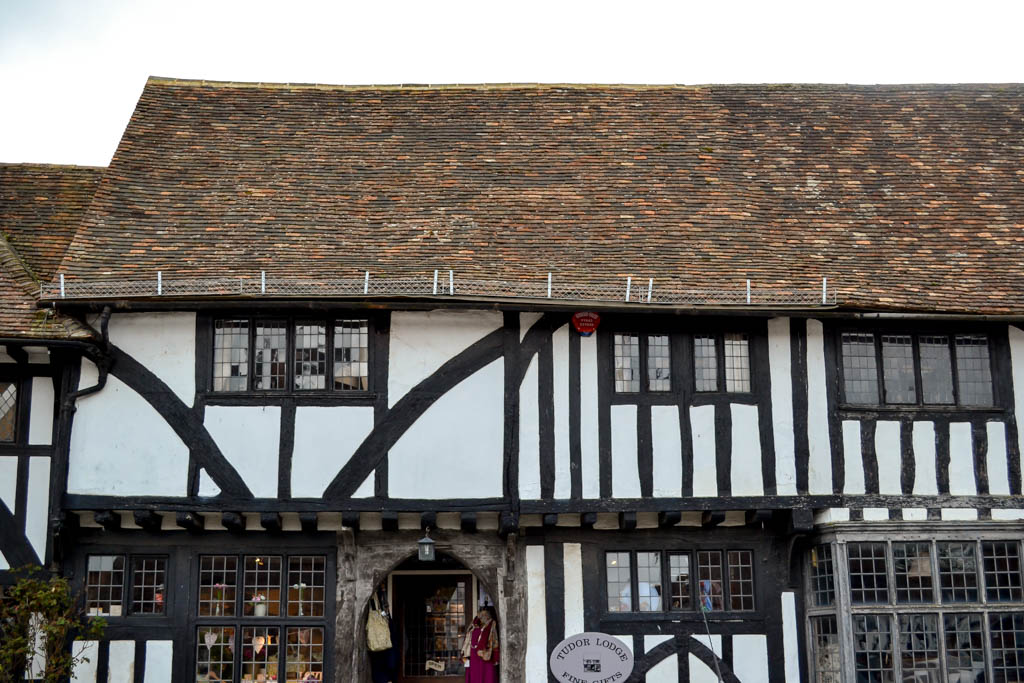
Tenterden Roofing - Tudor Lodge, Chilham, Ashford, Kent

Tudor Lodge, Chilham, Ashford, Kent

Preserving historic buildings is more about how we see ourselves, and experience our past.
It’s about protecting our environment from unnecessary waste and destruction. It even saves
(and actually makes) money.

And beautiful buildings are important. They are not just cultural identifiers, or historical
markers; they dramatically change our perception of our environment, how we experience
space – and beautiful buildings even have a measurable impact on how we feel.

Our nation’s historic buildings are undoubtedly beautiful. Well, most of them – there are
some real monstrosities of concrete and cladding out there. But, we suppose beauty is in the
eye of the beholder!
Even if you’re not keen on the look of some listed and historic buildings, preserving them
(yes, even the ugly ones!) is still vital. Here’s why…

Maintaining historic properties makes economic sense

Well maintained buildings retain their value, and keep working for longer. That means less
cost to the owner in the long run – and less risk for any investors, insurers or mortgage
providers. Plus, maintaining the aesthetic charm of our churches, town halls and other
heritage buildings attracts tourism, which keeps the love of history alive, and our villages
bustling with welcome economic activity.

On the other end of the usage scale, a business run from a solid, well kept heritage building
has the ability to attract more clients and talent, simply by standing out from the crowd. A
crumbling, decrepit building wouldn’t have quite the same effect – and would have a
business standing out for all the wrong reasons.

Environmental benefits of historic buildings

Preserving historic buildings is better for the environment. Even though advances in
demolition and recycling have given us amazing benefits, the fact remains that demolition is

dirty, and produces huge amounts of waste that cannot be salvaged. Transporting the waste
creates carbon emissions, too.

Not only that, but every new building is a huge consumer of natural resources, with modern
materials that don’t belong in nature. These are destructive to quarry from the Earth and to
produce, and are harder to dispose of once they’ve reached end of life.

A properly maintained, draught-free older building – made of stone, wood, or other ancient
materials – is also naturally better at insulation, and requires less energy to cool or heat.
Preserving historic buildings keeps us from impacting the environment too heavily.

Connection to history through historic homes

Sometimes, preservation is a legal requirement if buildings are listed – and we think that’s a
good thing. Having worked on restoration and preservation as conservation roofing
contractors, we recognise the importance of the buildings we all share.

Learning where we came from is massively important, even when the history is unpleasant.
Recognising our triumphs and tragedies is what allows us to progress – and many of our
historic buildings tell our story in ways we just can’t experience from TV, books, or
photographs.

Having a physical connection to history is proof that our ancestors existed. It helps us learn
about the best parts of our society – and learn from our worst mistakes.

We must preserve that shared cultural consciousness, and never allow that history to be
erased.

It’s more important than you’d think.

Period property roofing specialists in Kent since 1984

Tenterden Roofing is a passionate team of period roofing specialists in Kent. See our latest
work on Instagram – and contact us for a quote at [email protected].